If you’re reading this, chances are you’ve already done everything right.
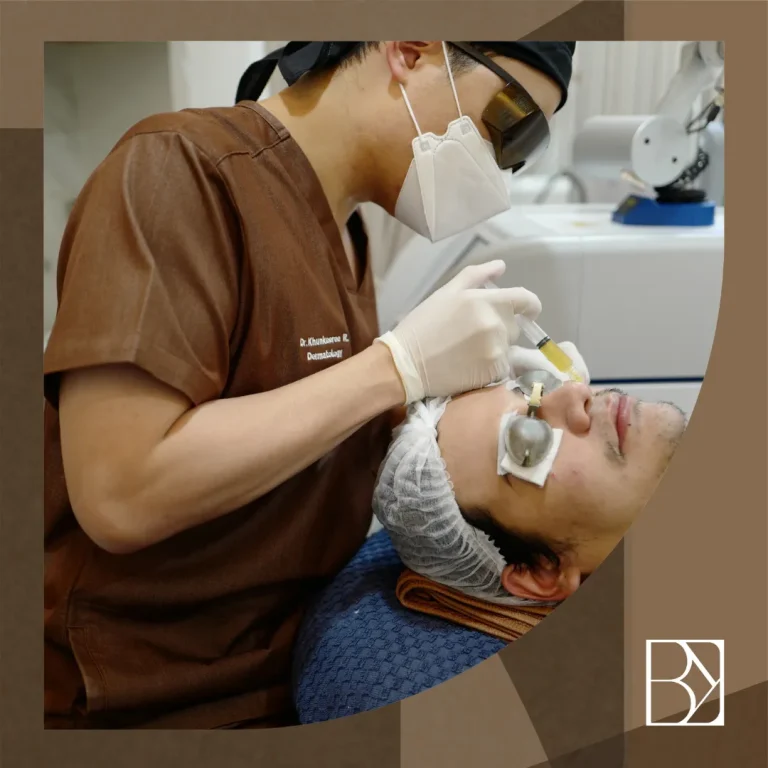
You went through multiple rounds of subcision.
You committed to microneedling RF—again and again.
You endured downtime, swelling, bruising, and the emotional rollercoaster of hoping this time would be different.
And yet…
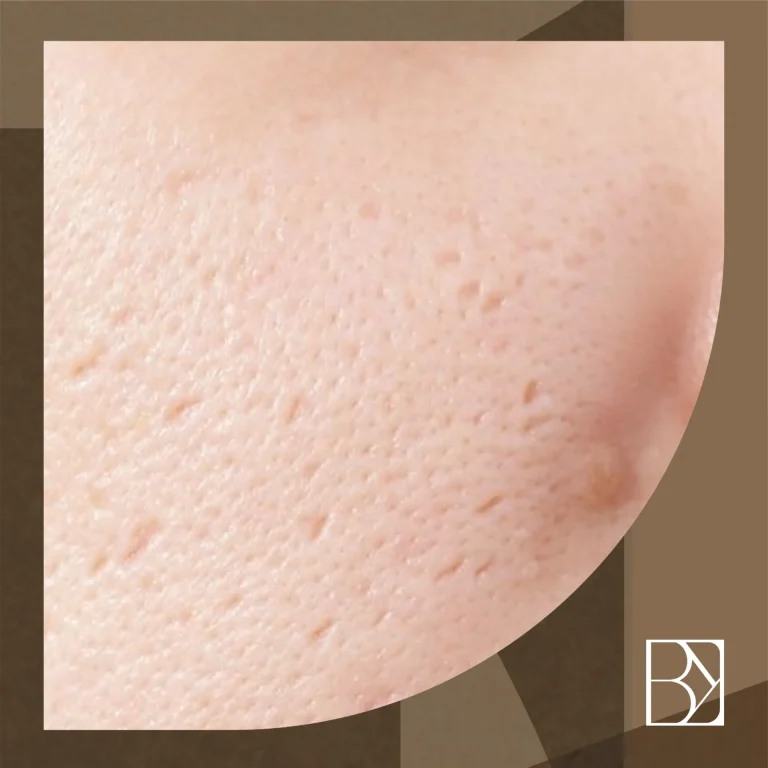
Your acne scars still look the same.
At some point, the question stops being “Should I do more sessions?”
And becomes “Why isn’t this working?”
The answer is uncomfortable—but empowering:
 Your scars were never just about tethering or collagen. They are about volume loss. Specifically, fat loss under the skin.
When “More Treatments” Isn’t the Answer
Subcision and microneedling RF are excellent treatments—for the right type of scar.
But they are often overused as a one-size-fits-all solution.
If you’ve done:
- 5–10+ rounds of subcision
- 6–10+ sessions of microneedling RF
- With only minimal or temporary improvement
This is usually not because:
- The doctor was “bad”
- The device was “weak”
- You didn’t do enough sessions
It’s because the underlying structure of your scar was misunderstood.
The Missing Diagnosis: Fat Atrophy Acne Scars
Many people with a history of moderate to severe inflammatory acne develop a specific type of scar known as:

This means:
- The inflammation from acne didn’t just damage collagen
- It destroyed fat cells under the skin
- Leaving a true volume deficit, not just a surface indentation
What does this look like clinically?
- Scars that look deeper in certain lighting
- A “sunken” or hollow appearance
- Skin that looks thin, fragile, or aged in scarred areas
- Poor response to collagen-only treatments
And most importantly: No amount of subcision or microneedling RF can replace missing fat.
Why Subcision Eventually Stops Working
Subcision works by cutting fibrotic bands that pull the scar downward.
Early on, it often helps because:
- There is tethering
- Releasing it allows the skin to rise
But after multiple sessions:
- The tethering is already released
- There is no longer tension to cut
- What remains is empty space
At this stage, repeating subcision is like: Cutting ropes that no longer exist.
Without volume support, the skin simply collapses back down.
Why Program Microneedling RF Has a Ceiling
Microneedling RF stimulates collagen remodeling.
This is incredibly useful—but collagen:
- Is not fat
- Cannot fully replace lost volume
- Has limits in severely atrophic scars
In fat-loss scars:
- You can thicken the dermis
- Improve texture slightly
- But you cannot rebuild the foundation
This is why many patients say: My skin quality improved, but the scars are still there.
What Actually Works for Fat-Loss Acne Scars
1. Structural Volume Replacement
This can include:
- Program Dermal fillers (case-dependent)
- Fat grafting (for extensive volume loss)
The goal is not “plumping,” but rebuilding support so the skin has something to rest on.
2. Program Collagen Biostimulators
Unlike traditional Program fillers, Program biostimulators:
- Trigger your body to create collagen gradually
- Improve skin thickness and elasticity
- Emerging evidence shows they may also support fat regeneration in inflamed tissue
This is critical for scars caused by acne inflammation—not aging.
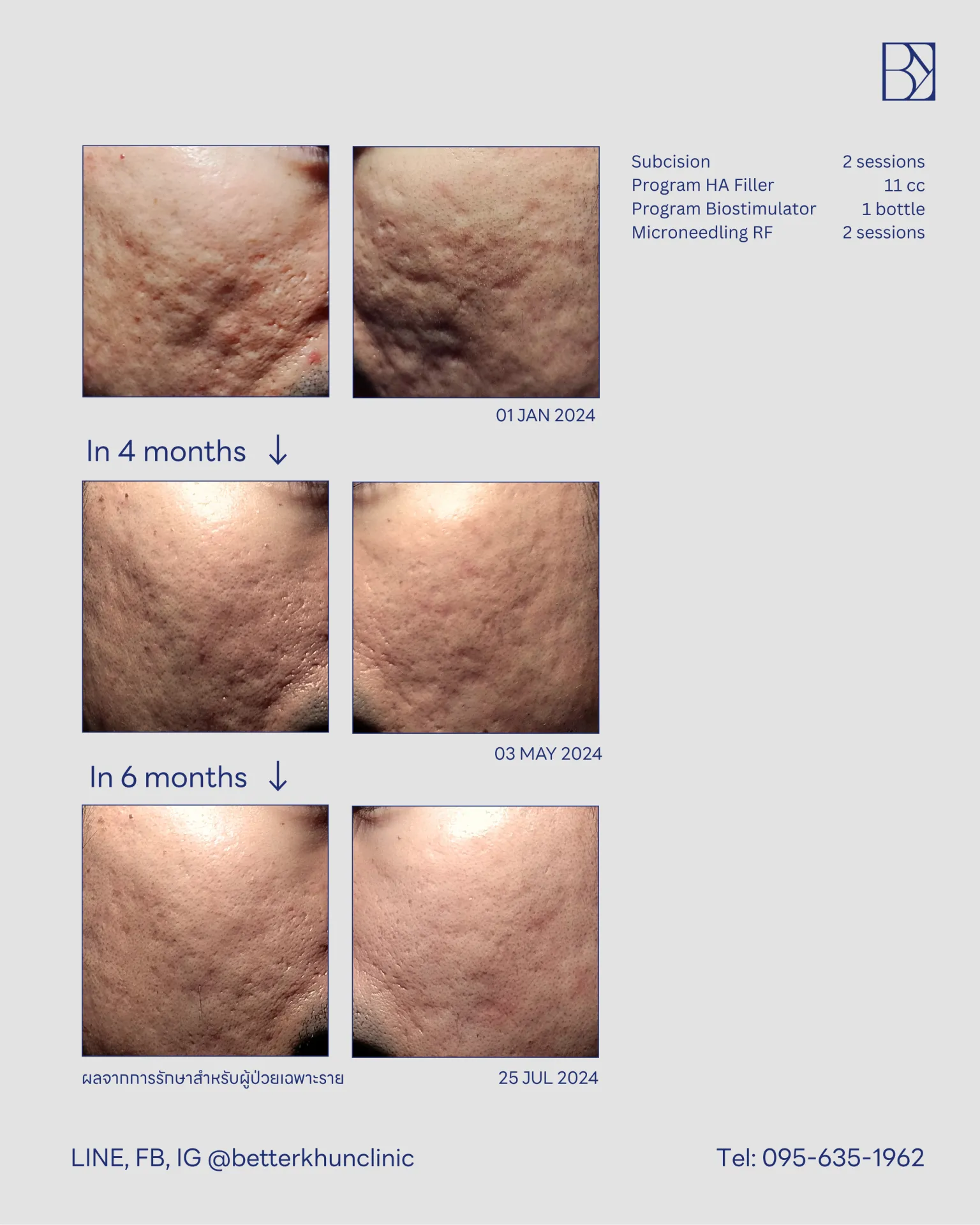
3. Combination Therapy (Done in the Right Order)
For advanced scars, treatment should follow logic—not habit:
- Release tethering (if still present)
- Restore volume (fat or Program biostimulation)
- Then refine texture (Program RF / laser)
Most people do this in reverse, which is why results stall.
Why This Wasn’t Explained to You Before
Because:
- Many clinics focus on devices, not diagnosis
- Fat atrophy is harder to explain—and harder to treat
- Volume restoration requires experience, planning, and patience
It’s easier to say: Let’s do a few more sessions.
But more of the wrong treatment is not progress.
The Right Question to Ask Now
Stop asking:
“How many more sessions do I need?”
Start asking:
- “Do my scars have fat loss?”
- “Are we restoring structure, or just stimulating skin?”
Final Thought
Acne scars are a structural injury—and structural problems require structural solutions.
If you’ve already done the hard part by enduring multiple treatments,
the next step isn’t giving up.
It’s changing the strategy.
And that’s where real improvement begins.
 Consult with our doctors today:
 LINE@: @betterkhunclinic or https://lin.ee/pk7yfup
 Find us on Google Maps: https://maps.app.goo.gl/BhRGxh8LRorfaJPh8?g_st=ic
 Call us: 095-635-1962
 BTS Phloen Chit Station, Exit 3 – Next to Rosewood Hotel
Bangkok, Thailand