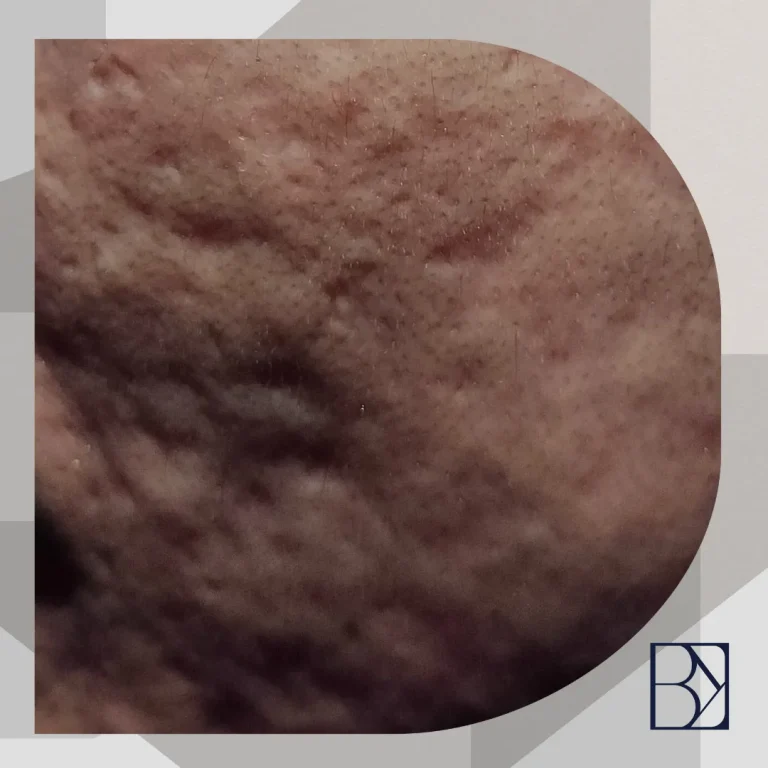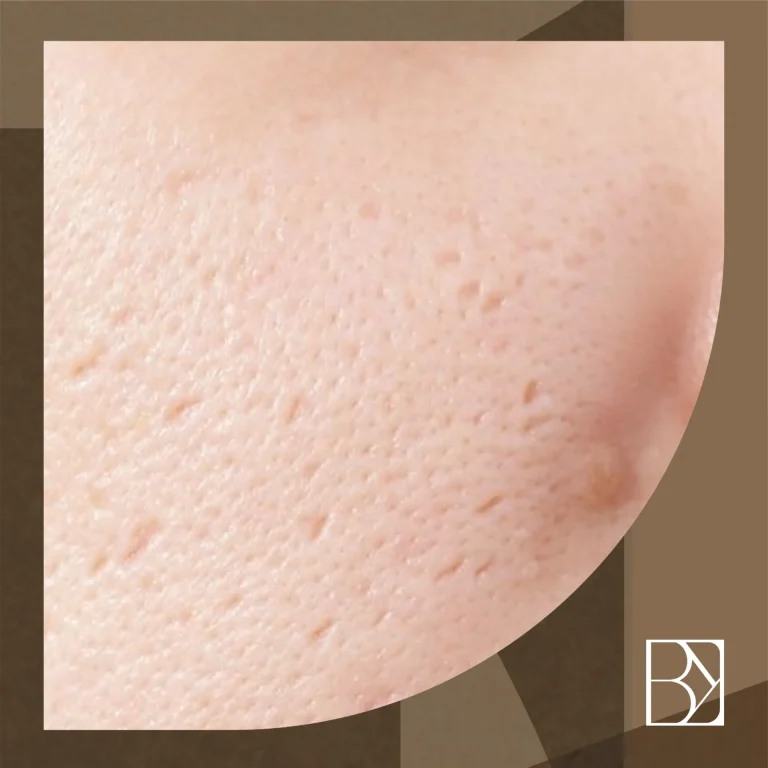
“Doctor, my ice-pick scar looks wider. Did we make it worse?” 🫠
If your ice pick scar looks wider after TCA, you’re not alone. In fact, one of the most common—and completely valid—concerns after TCA is: “Doctor, did we make it worse?”
You did the procedure.
You followed aftercare.
The scab fell off.
And then, suddenly, you look in the mirror and think:
Wait… why does it look wider?
Naturally, panic starts creeping in. However, before jumping to conclusions, let’s unpack what’s actually happening beneath the surface—because what you’re seeing is often not damage, but transition.
First, What Program TCA Is Actually Doing
To understand why an ice pick scar looks wider after TCA, we first need to understand what the treatment is designed to do.
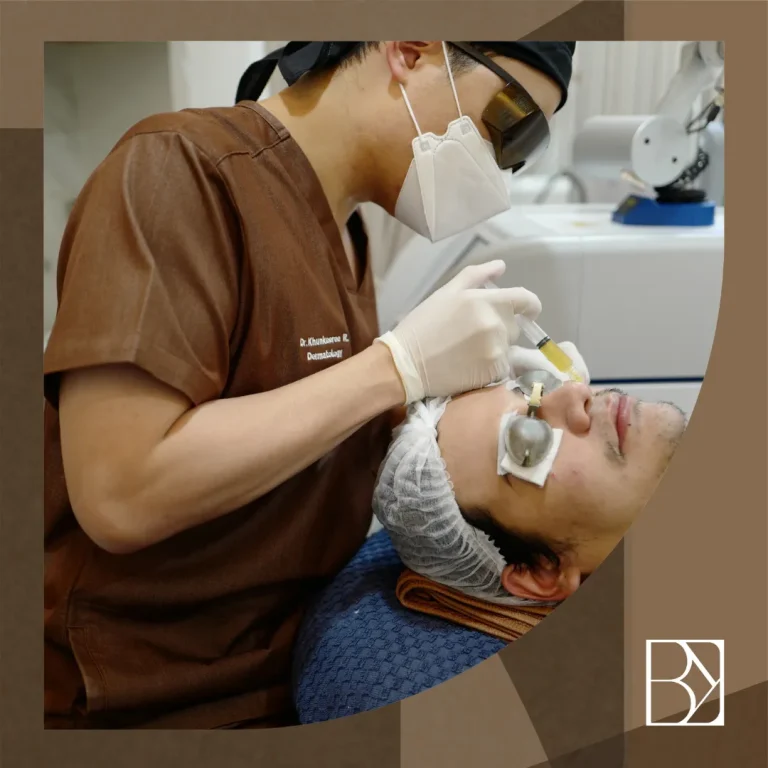
Program TCA CROSS (Chemical Reconstruction of Skin Scars) works by placing a high concentration of trichloroacetic acid directly into the base of the ice-pick scar. In other words, it targets the deepest part of the scar rather than the surface.
As a result, this creates a controlled chemical stimulation inside the scar tract.
Here’s what that controlled injury does:
📐 Softens rigid scar walls
🔄 Initiates a repair response
📶 Stimulates collagen remodeling
⬆️ Encourages gradual elevation of the scar base
Importantly, the goal is not to “fill” the scar immediately. Instead, the goal is to stimulate your body to remodel it over time. Therefore, early visual changes don’t always reflect the final outcome.
Ice-Pick Scars Are Deeper Than They Look
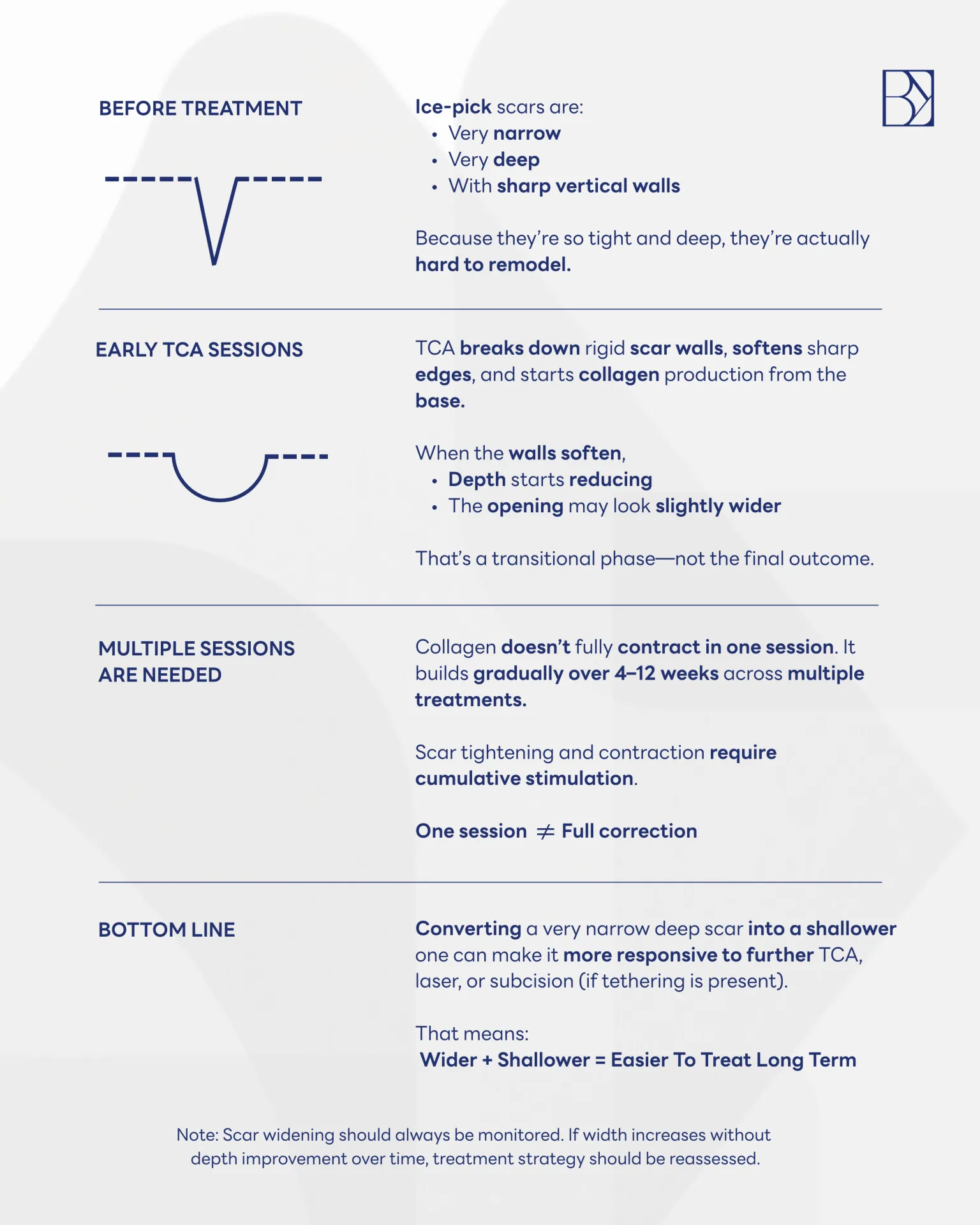
At first glance, ice-pick scars may appear small. However, structurally, they are shaped like a narrow V or funnel.
Small opening.
Sharp walls.
Deep track.
Read more: Ice Pick Scars – Causes, Treatments, and How to Finally Heal Acne Scars
Why an Ice Pick Scar Looks Bigger After Program TCA at First
1️⃣ Understanding the Geometry Shift
When Program TCA begins softening and remodeling the walls, the steep sides start to relax. As those rigid edges loosen, the scar’s opening can temporarily appear broader.
However, this does not mean the scar expanded.
Rather, the walls are no longer as sharply angled.
In other words, the depth may be improving while the surface shape is still adjusting.
💡 Shallower can temporarily look wider before it looks better.
Therefore, what appears worse may actually be part of the improvement process.
2️⃣Healing Timeline for Ice Pick Scars
Between Weeks 2–4, You’re in the Early Remodeling Phase.
During this period:
- Inflammatory signals are still active
- Fibroblasts are producing collagen
- Tissue restructuring is underway
- Mild residual swelling may still be present
Even subtle swelling alters how light reflects off the skin. Ice-pick scars look deeper or sharper when they cast shadows.
As a result, the scar may appear more noticeable—even though structural repair is happening underneath.
Sometimes the scar isn’t worse. It’s just catching light differently.
3️⃣ The Scab Phase Can Create Temporary Edge Definition
Right after Program TCA, a white frost forms. Then, a small scab develops. Eventually, it detaches.
During the scab stage, the surface is slightly raised. However, once it falls off, you’re left with fresh pink skin.
At that point, the new skin may initially look:
- Slightly wider
- More defined
- More noticeable in bright lighting
It’s the early reconstruction phase. The collagen matrix underneath is still immature.
Scar Remodeling Is Not Linear
Here’s something patients don’t always hear:
Scar revision does not improve in a straight line.
It’s more like:
- Controlled injury
- Inflammation
- Swelling
- Early collagen deposition
- Reorganization
- Gradual refinement
During reorganization, collagen fibers shift from disorganized type III collagen into stronger, more structured type I collagen.
That conversion takes 8–12 weeks to stabilize.
Which is why:
⚙️ Scar revision should be evaluated at 8–12 weeks—not at Week 3.
Why Multiple Sessions Are Often Needed
Ice-pick scars are structurally deep. One Program TCA session begins the remodeling process. But dense fibrotic scars often require staged stimulation.
Each session:
- Breaks down additional rigid collagen
- Promotes incremental elevation
- Encourages gradual shallowing
Program TCA is cumulative. The improvement compounds over time.
📩 Consult with our doctors today:
🔗 LINE@: @betterkhunclinic or https://lin.ee/pk7yfup
📍 Find us on Google Maps: https://maps.app.goo.gl/BhRGxh8LRorfaJPh8?g_st=ic
📞 Call us: 095-635-1962
🚆 BTS Phloen Chit Station, Exit 3 – Next to Rosewood Hotel
Bangkok, Thailand